


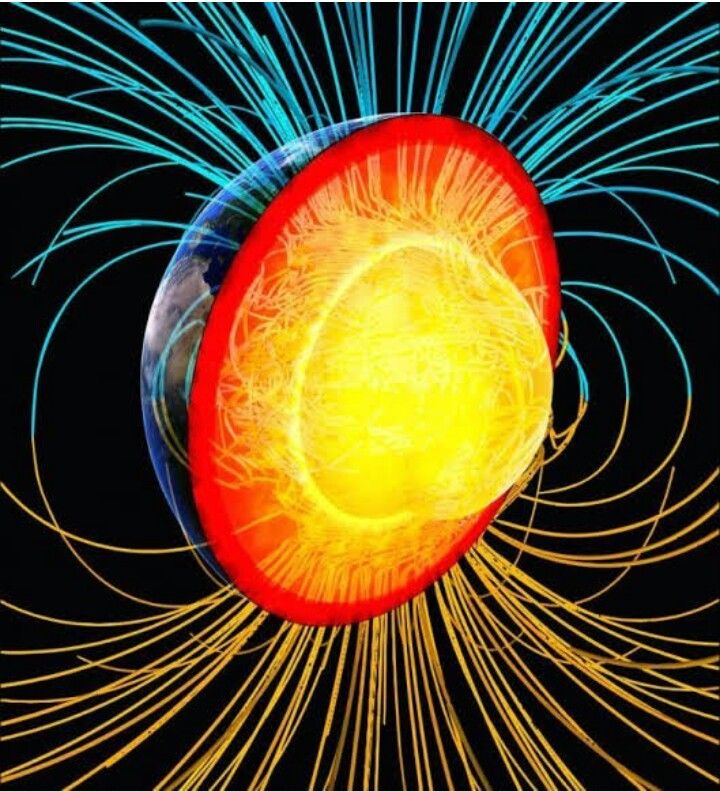
 Imagine Earth’s core as a giant, bubbling cauldron of molten metal, swirling like a cosmic soup. Just like boiling water on a stove, convective forces keep this liquid metal constantly moving, helped along by Earth’s rotation. As this molten mayhem flows, it generates massive electrical currents—hundreds of miles wide and zooming around at thousands of miles per hour. This whole chaotic process is what keeps Earth’s magnetic field alive and kicking, and scientists call it the geodynamo (which honestly sounds like a cool band name).
Earth’s magnetic field is like a giant cosmic bouncer, keeping most of the solar wind’s rowdy charged particles from crashing the party. If not for this protective shield, these particles would gradually tear apart our ozone layer—the very thing standing between us and a UV-ray barbecue. One way this happens is when solar winds snatch up bits of atmospheric gas, stuffing them into magnetic field bubbles before yanking them away like a cosmic claw machine. Scientists studying Mars found that when its magnetic field ghosted, the planet’s atmosphere practically packed up and left with it—turning Mars into the dry, dusty place it is today. Earth’s magnetosphere shields us from harmful energy from the Sun and deep space. Take a deep dive to the center of our world to learn more about its causes, effects, variations.
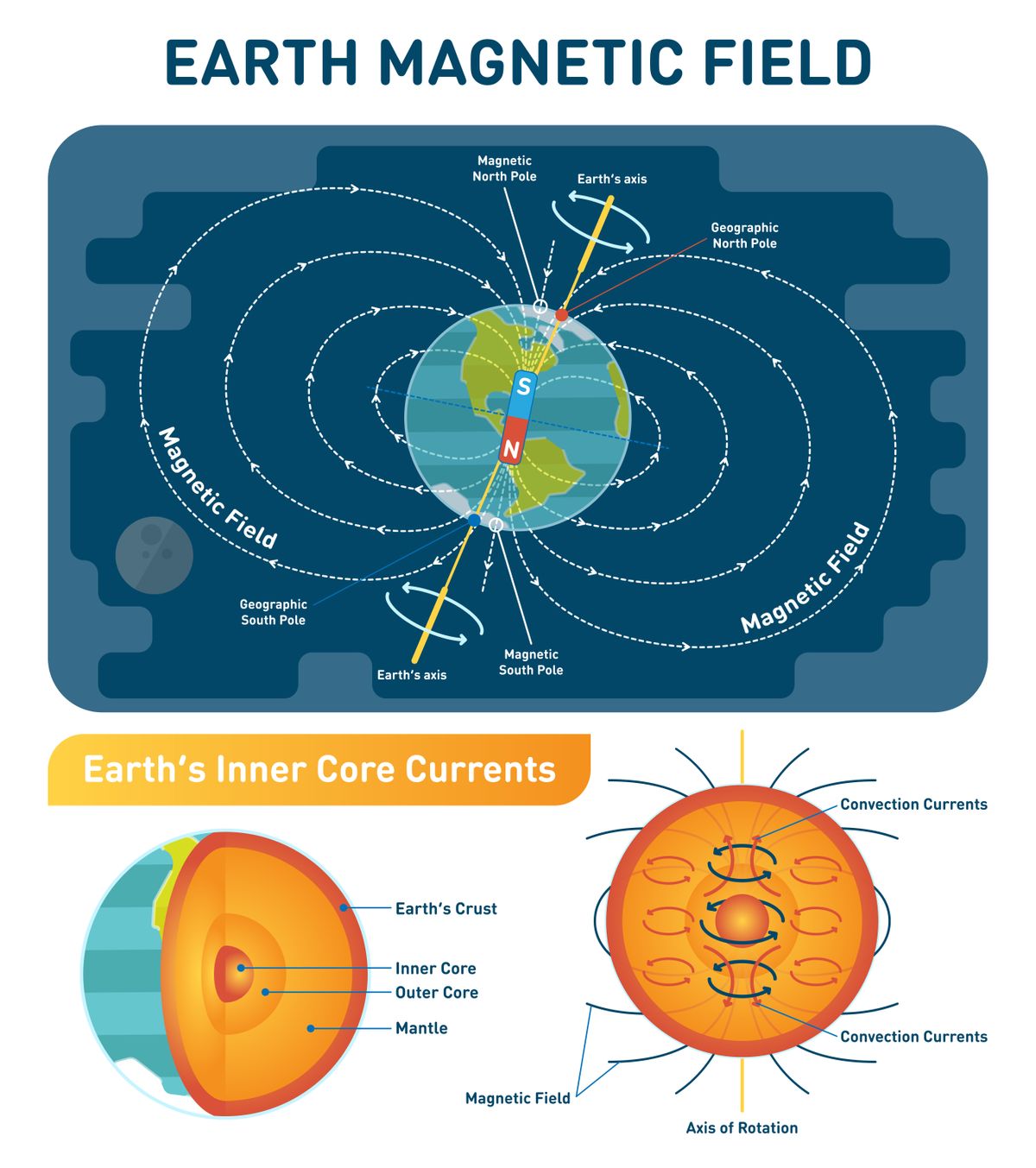 On the surface, Earth’s magnetic field acts like a giant, invisible bar magnet, complete with north and south poles. The field lines form a never-ending loop, diving into the planet at the north magnetic pole and popping out at the south. But thanks to the Sun, things get a little distorted—solar wind squishes the field on the daytime side and stretches it out like taffy on the night side.
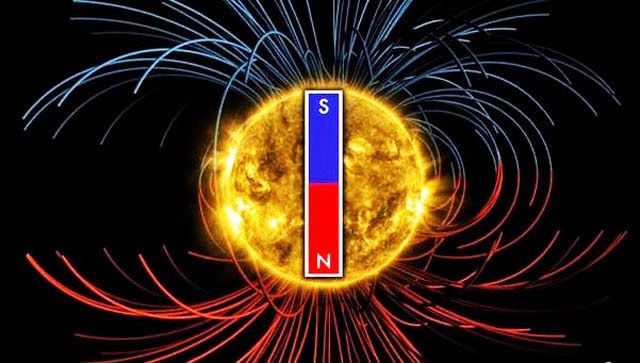
Now, if you’re thinking we can predict where this is all going—think again. Earth’s magnetic field is about as predictable as a cat’s behavior. Measuring it over a few years, decades, or even centuries doesn’t give us a clear long-term trend because it’s always doing its own thing, going up and down for reasons we still don’t fully understand. Also, the field isn’t just a simple dipole (like a bar magnet)—it’s got a lot more complexity, so even if one part weakens, the overall field might not actually be shrinking.
Since we’ve only been able to directly measure Earth’s magnetic field for a few centuries, scientists have had to get creative. Enter paleomagnetism—the study of ancient magnetic clues hidden in volcanic rocks, sediments, and even old artifacts. By analyzing these natural “recordings” and combining them with satellite data and computer models, researchers can piece together the epic history of Earth’s magnetic field, including when it decided to flip-flop in the past. It’s basically detective work, but on a planetary scale!
Oh, and Earth’s magnetic north pole? It’s been on the move. Back in the early 1900s, it was drifting at about 10 km (6.2 miles) per year from Canada toward Siberia. By 2003, it had picked up the pace to 40 km (25 miles) per year, and it’s been speeding up ever since. At this rate, it might just pack its bags and head off on a world tour!
Among the four rocky planets in our solar system, you could say that Earth’s “magnetic” personality is the envy of her interplanetary neighbors. Oh, and Earth’s magnetic north pole? It’s been on the move. Back in the early 1900s, it was drifting at about 10 km (6.2 miles) per year from Canada toward Siberia. By 2003, it had picked up the pace to 40 km (25 miles) per year, and it’s been speeding up ever since. At this rate, it might just pack its bags and head off on a world tour!