Jonas Becker
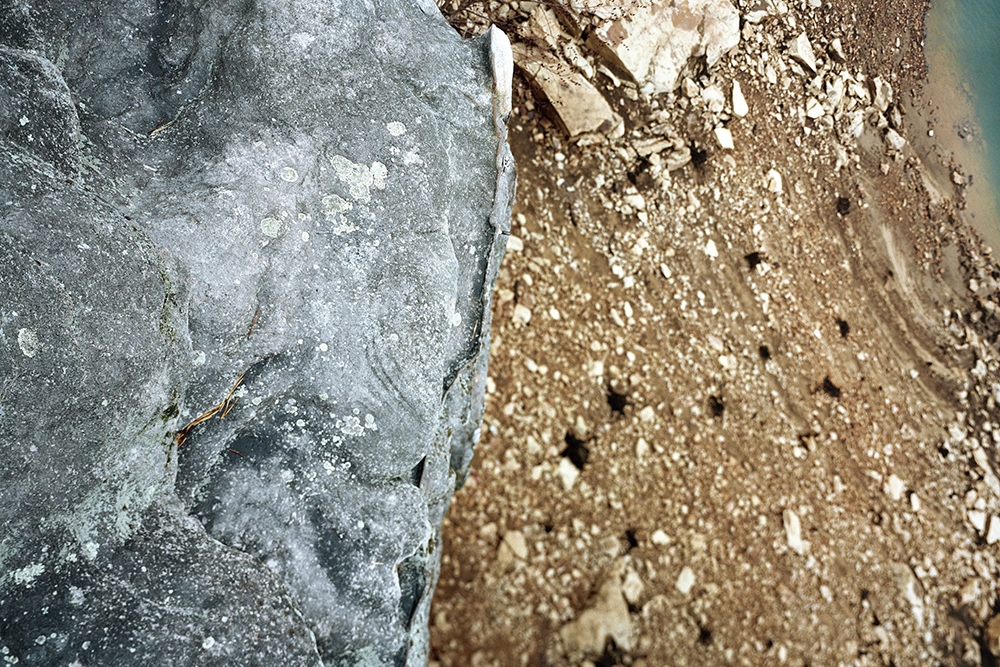
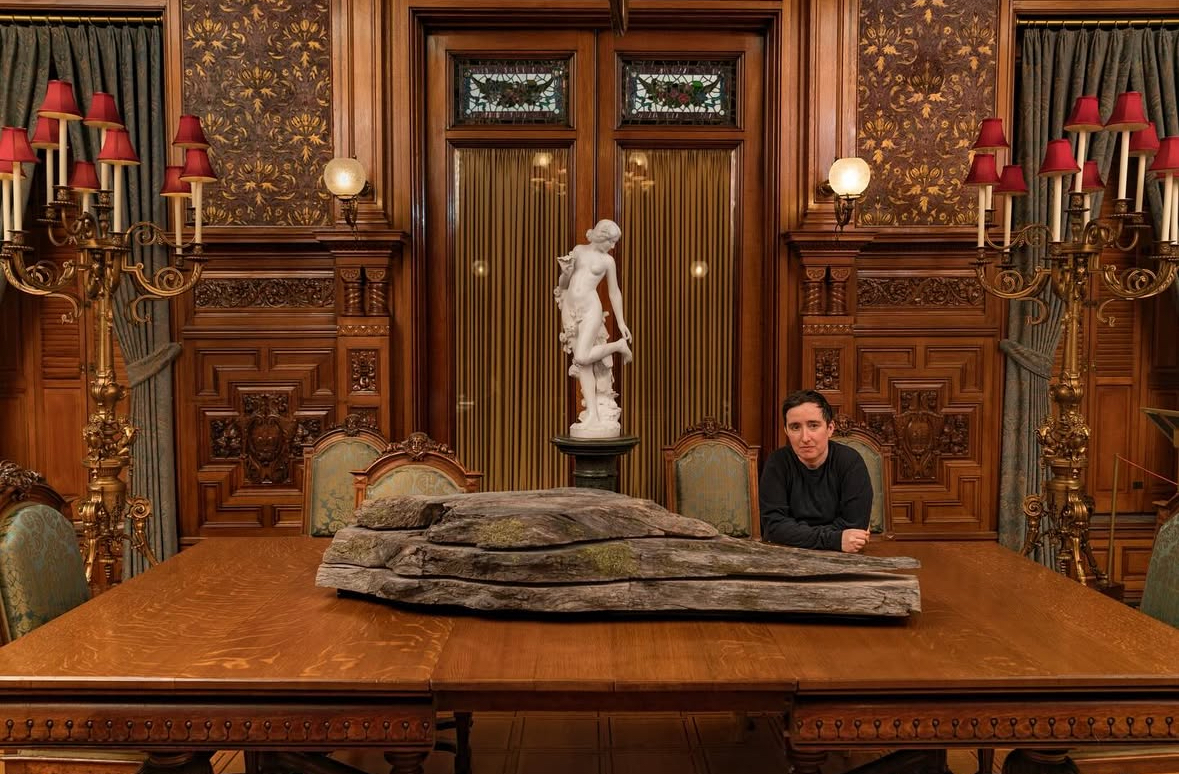
1810, 1833, 1880 2024 Sound, walnut, oak, coal 2025.6 Most buildings preserve within their fabric the memory of a forest. After trees are cut, carved, stained, and varnished, it is easy to lose track of their origins and histories. During the Industrial Revolution in the United States, lumbering cleared the path for mining and farming. In this work, Becker interlaces multiple generations of extractionist histories, highlighting the critical roles forests, mines, and farms play in the process of industrialization. Through audio and sculptural elements, the artist juxtaposes the natural resources of timbered walnut and coal, summoning the millions of years of geological processes that turn timber into the combustible fuel of industrialization. Positioned on the dining room table, suspended between their natural and commodified states, are half-processed sections of timbered walnut once sold as slabs for furnishings. Also included in the installation are small coal-carved effigies of animals and miners that allude to coal's critical role in the industrialization of Chicago's stockyards, which fueled the rapid urbanization that defined the Gilded Age. Becker's installation titled 1810, 1833, 1880 references two key years in Chicago's lumbering and mining history: 1810-first coal mine opened in Illinois and 1833-the year commercial lumber business began in the Chicago area. The final date, 1880, marks the year when the oak used throughout the dining room was likely harvested.