The Poor

The Poor
The Driehaus Museum's exhibition "A Tale of Today: Materialities" sheds light on the often-overlooked narratives of Chicago's working class, particularly factory workers, coal miners, and servants whose labor underpinned the city's rich occupants. Several installations poignantly address the lives and labor of Chicago's working class during the Gilded Age.
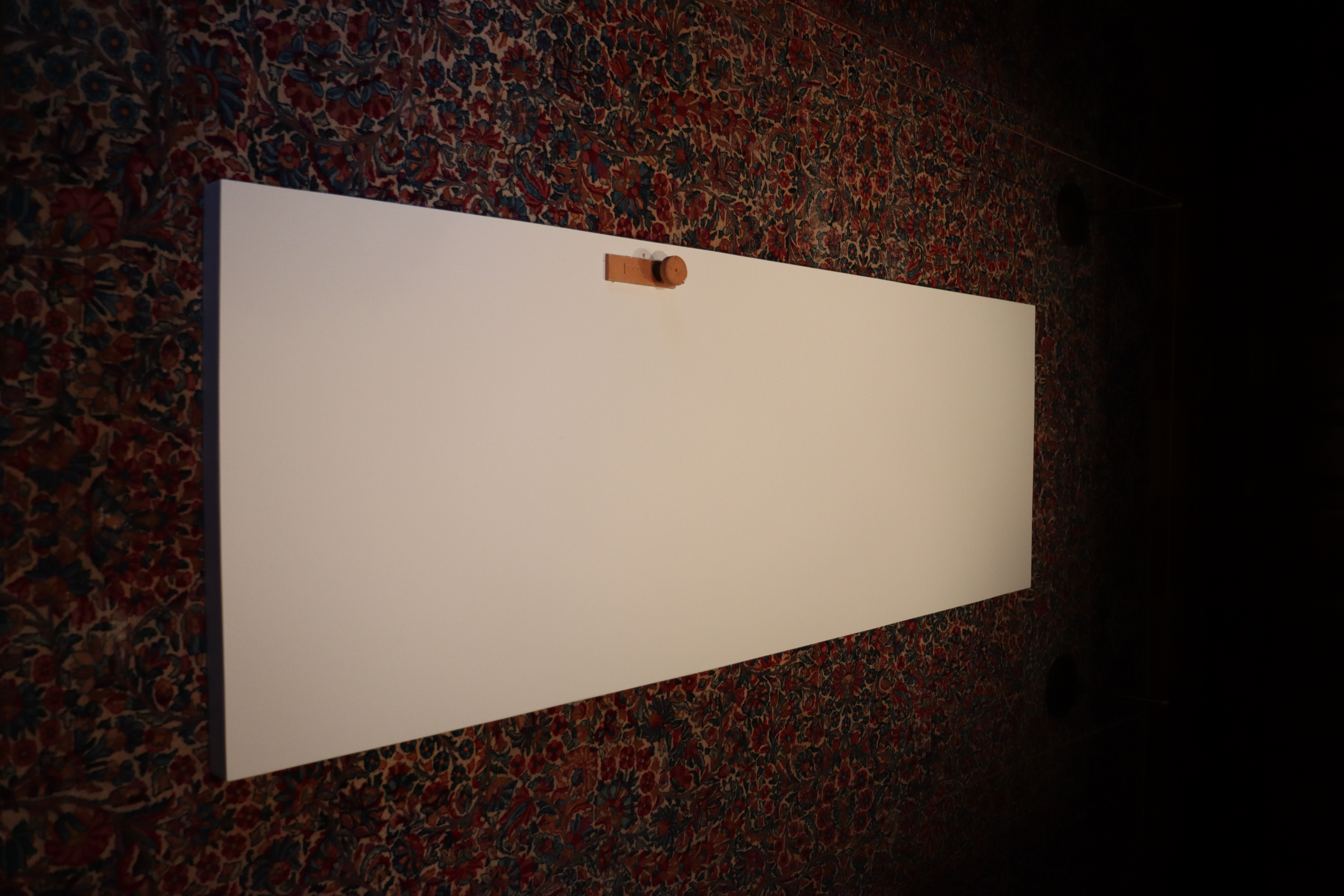
Industry of the Ordinary (Adam Brooks and Mathew Wilson) | Palimpsest, 2024
Industry of the Ordinary's Palimpsest features a doorknob sculpted from clay sourced from the Chicago River, clay that was historically used by poor laborers to form the bricks used in building wealthy homes like the Nickerson Mansion. The door itself is a replica of the kind of doors that once seperated the servant quarters from the living spaces of the wealthy Nickerson family. This piece emphasizes the physical and metaphorical barrier between the opulence of the mansion and the invisible laborers who built it, drawing attention to the unequal access to space and status.
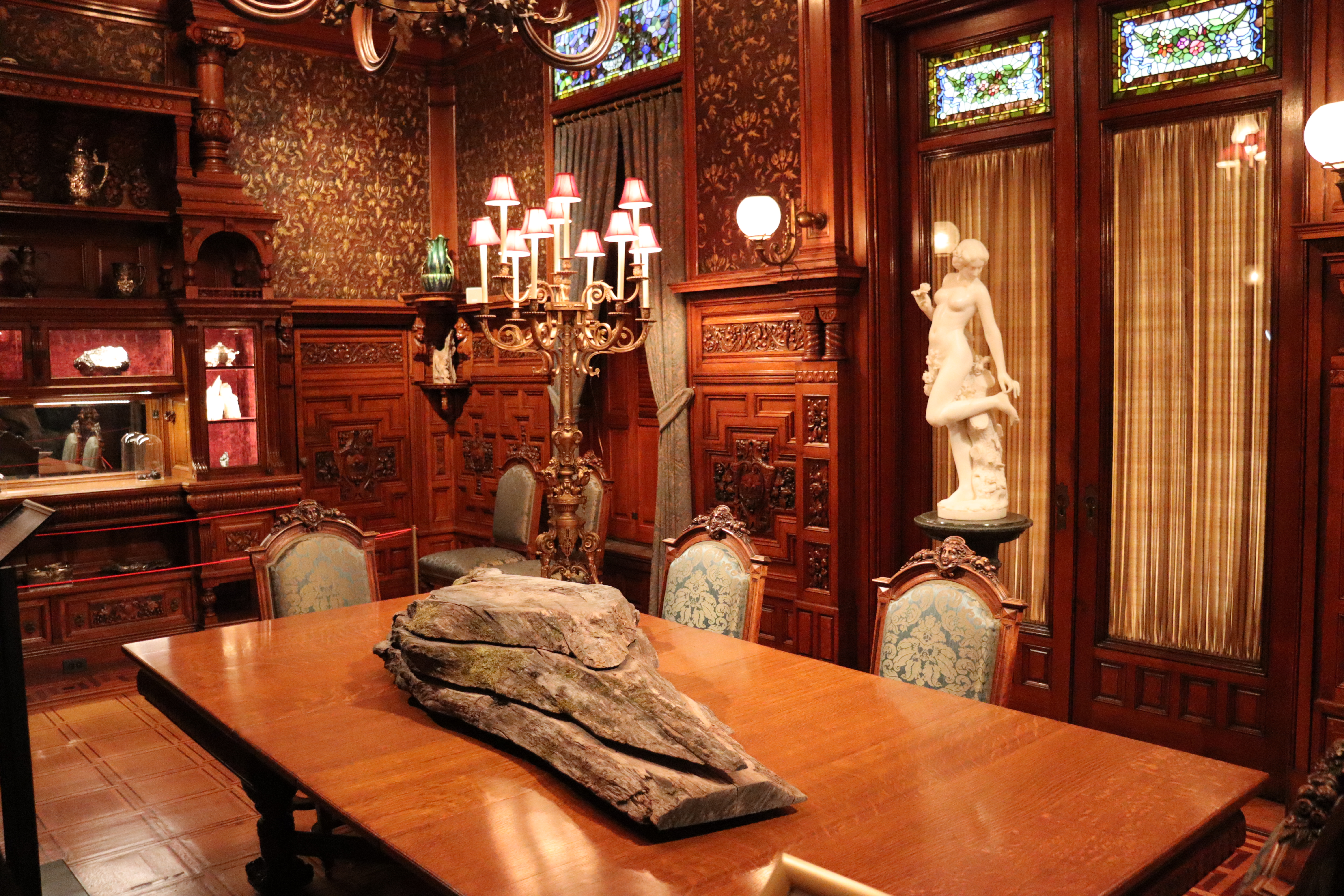
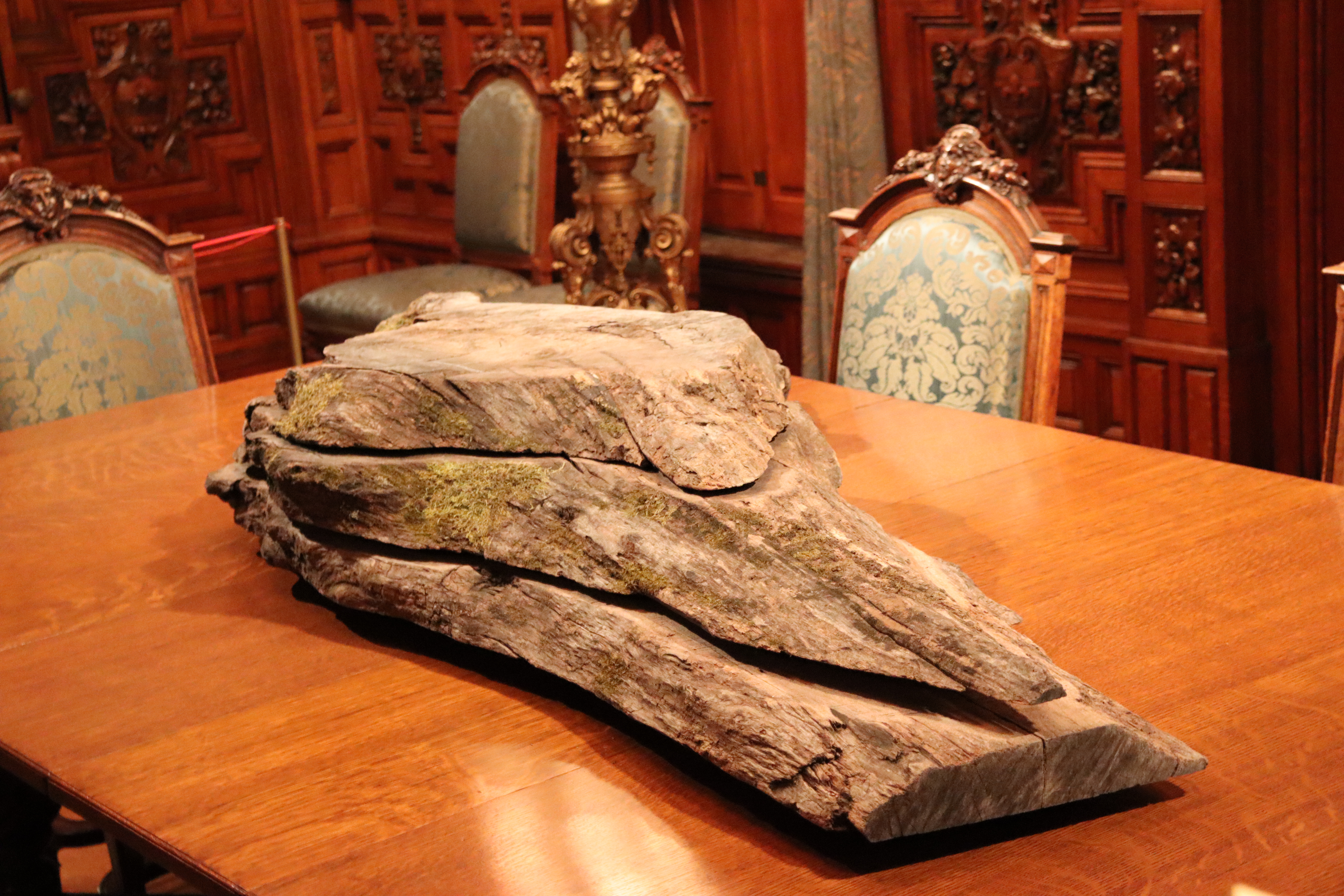
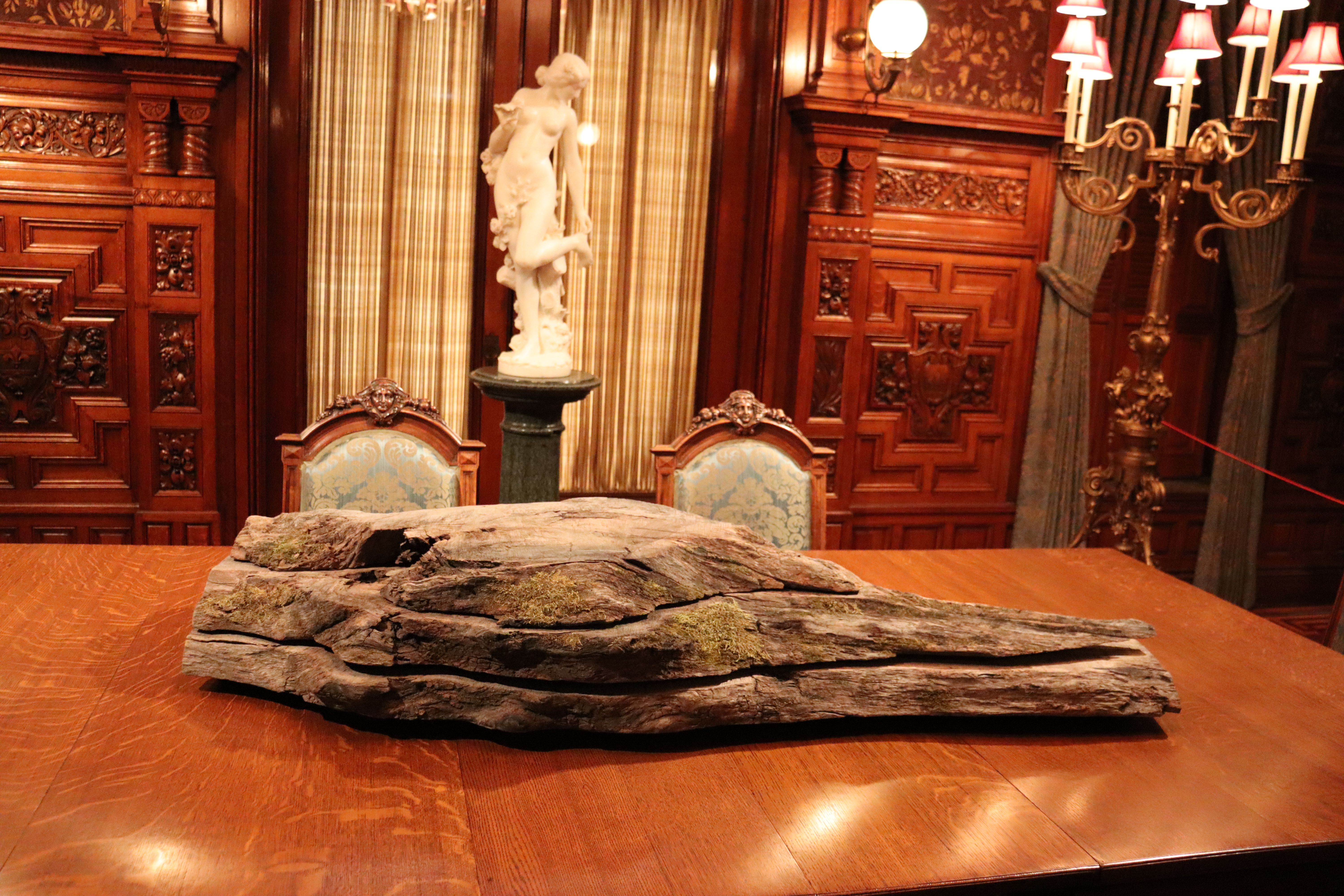
Jonas N.T. Becker | 1810, 1833, 1880, 2024
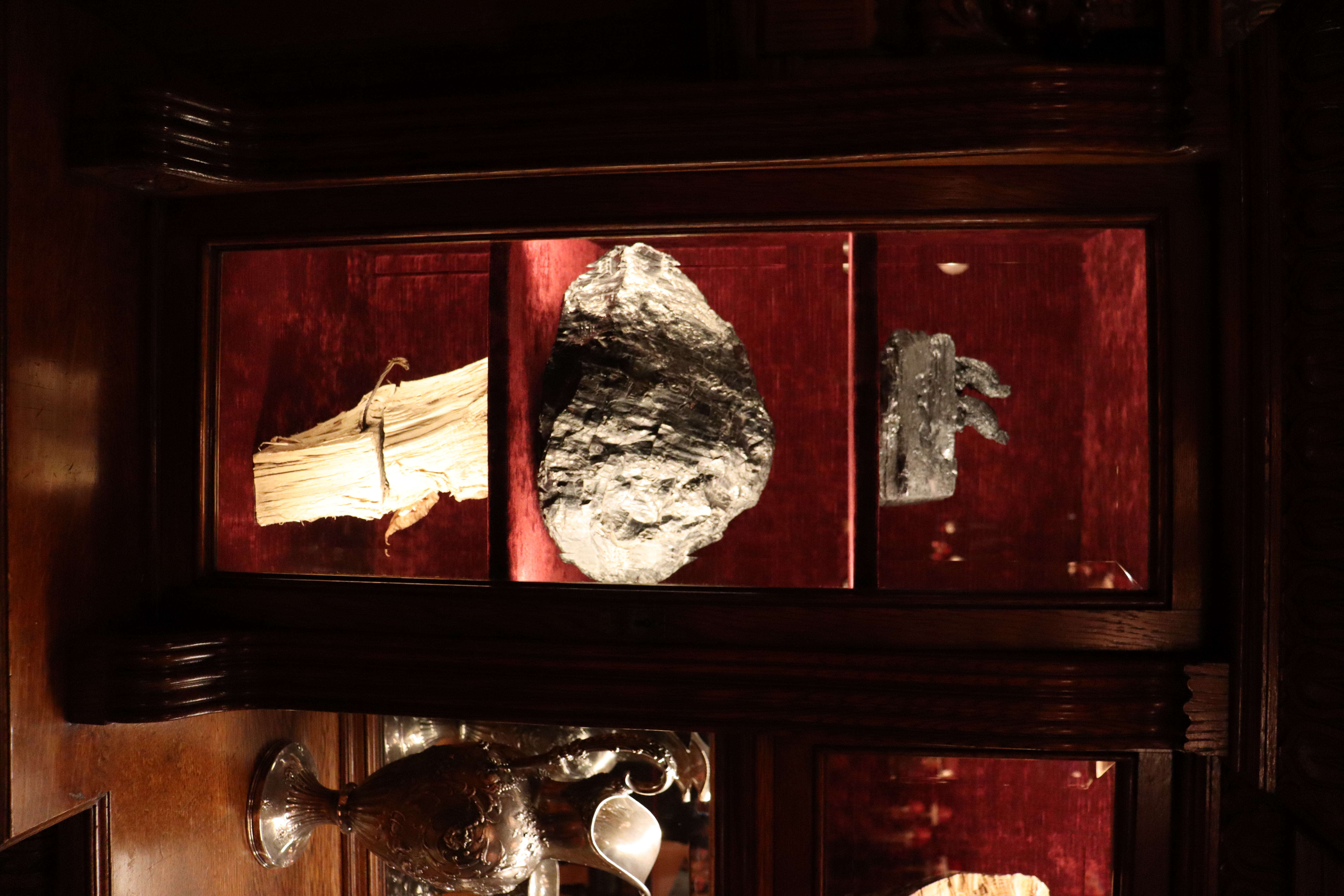
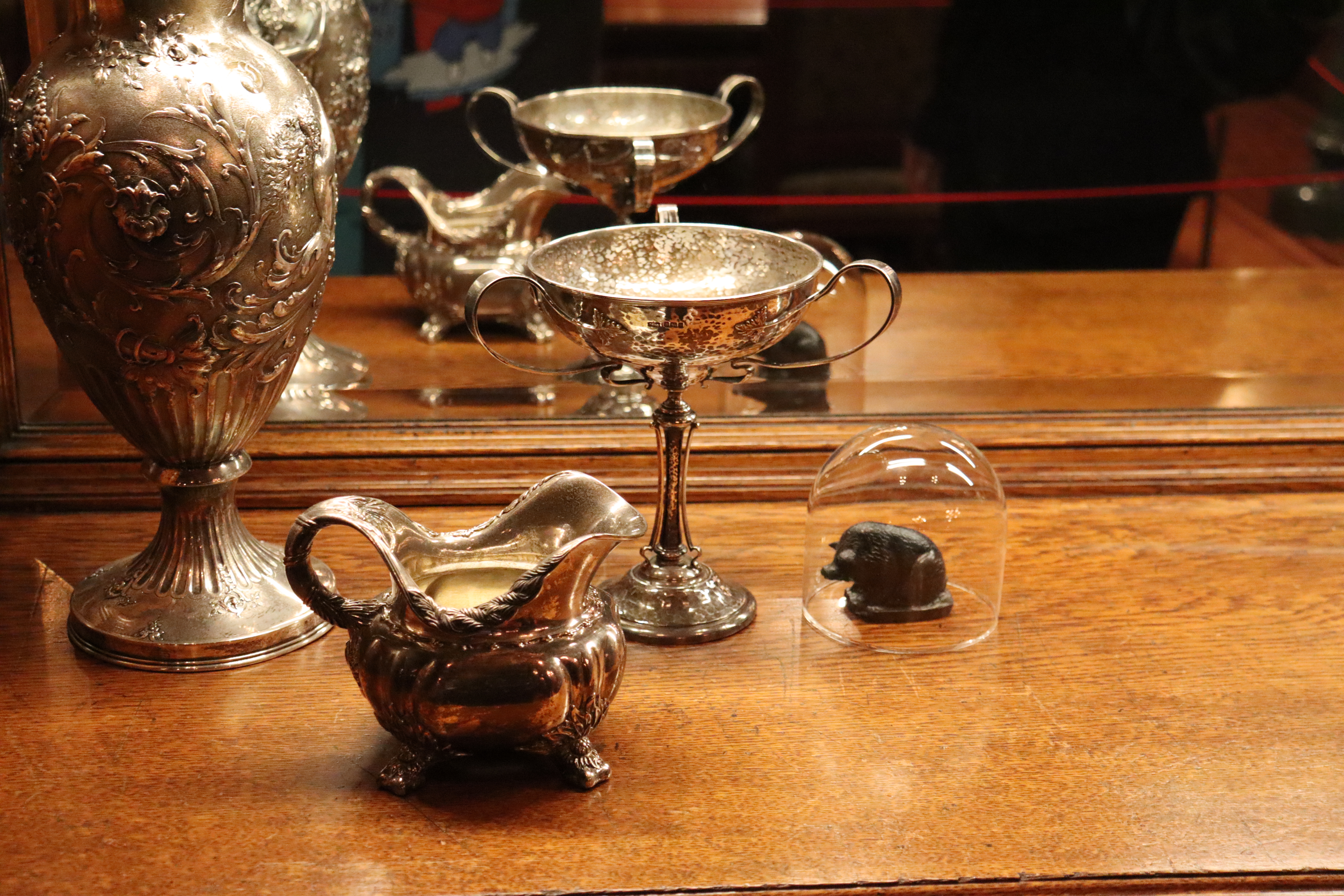
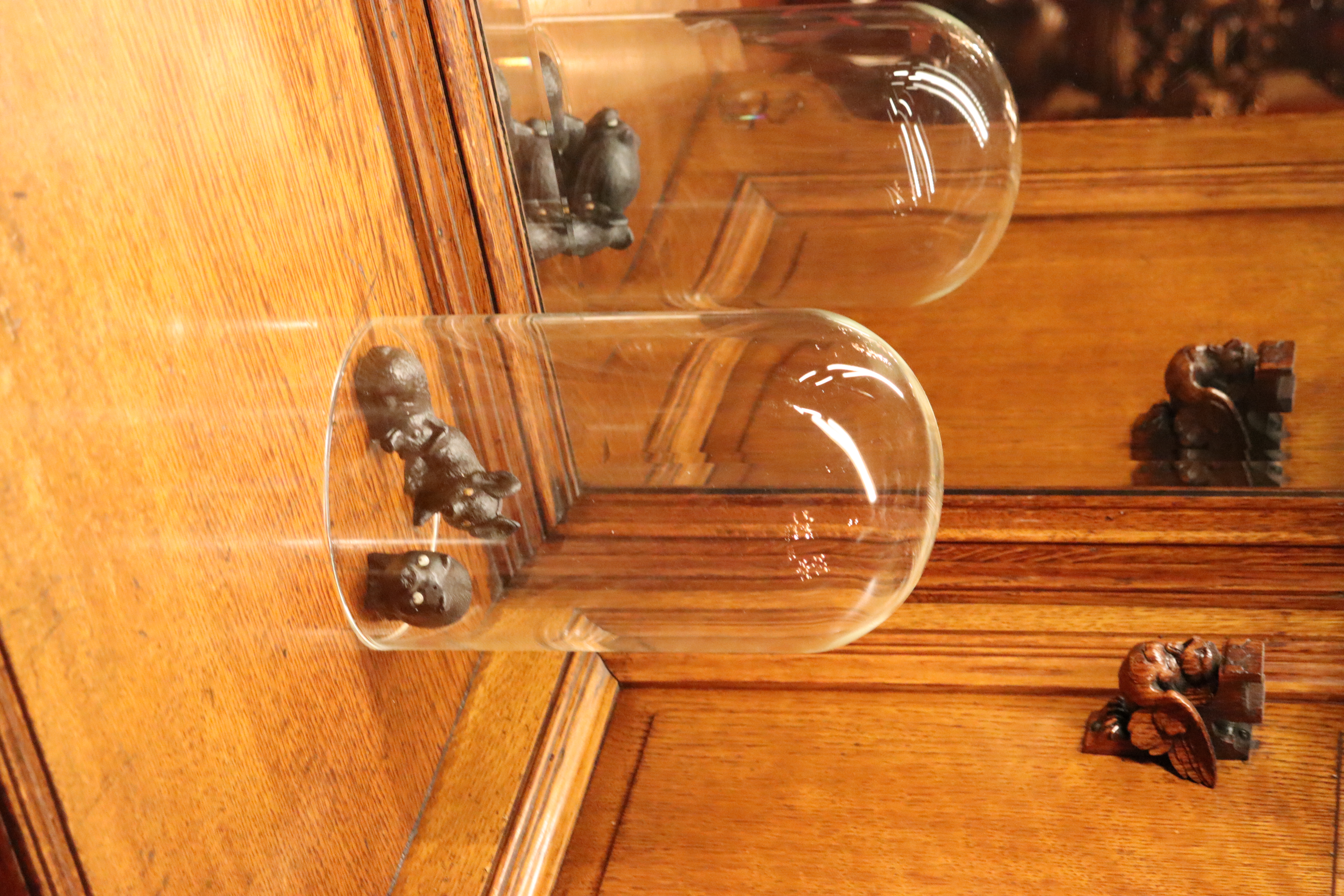
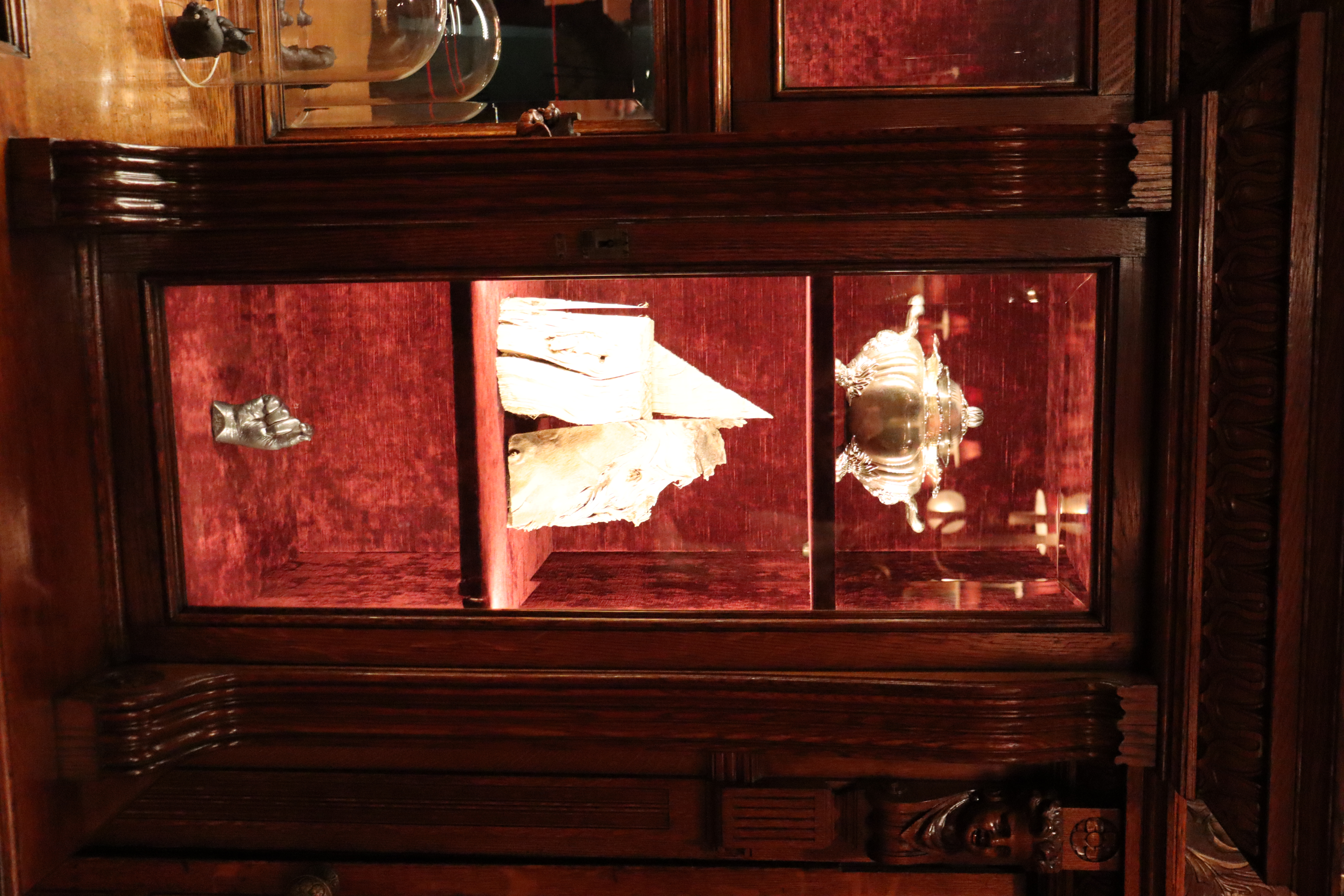
Jonas N.T. Becker's triptych—"1810," "1833," and "1880"—consists of animal sculptures carved from coal and a slab of walnut wood, symbolizing the coal miners and lumber workers who made possible the comforts enjoyed by the upper class. The coal represents the energy that kept rich homes warm, while the walnut highlights the labor-intensive industry of furnishing opulent interiors—both extracted at the cost of the laborers’ health and livelihood.
Ebony G. Patterson | reach..., 2018
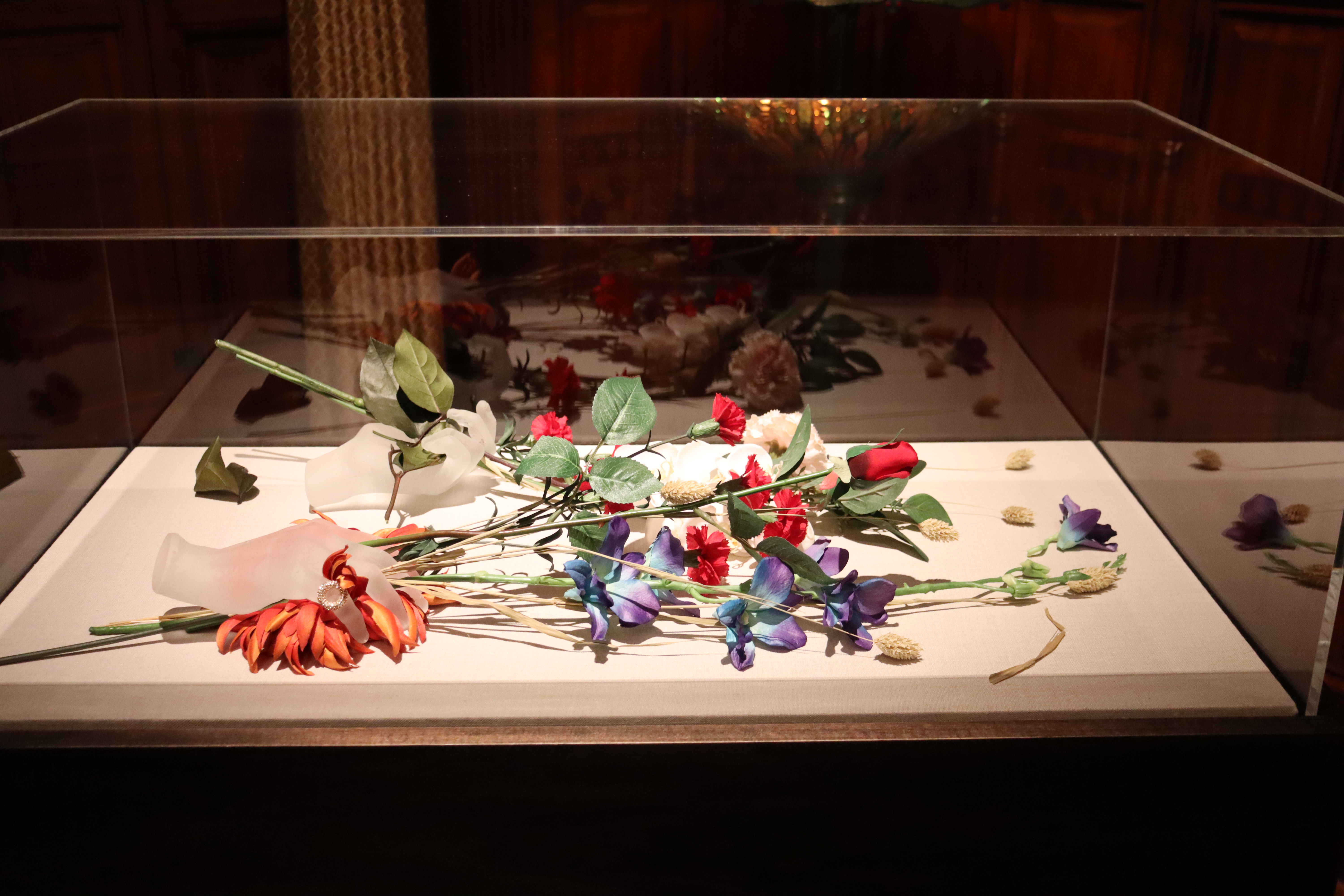
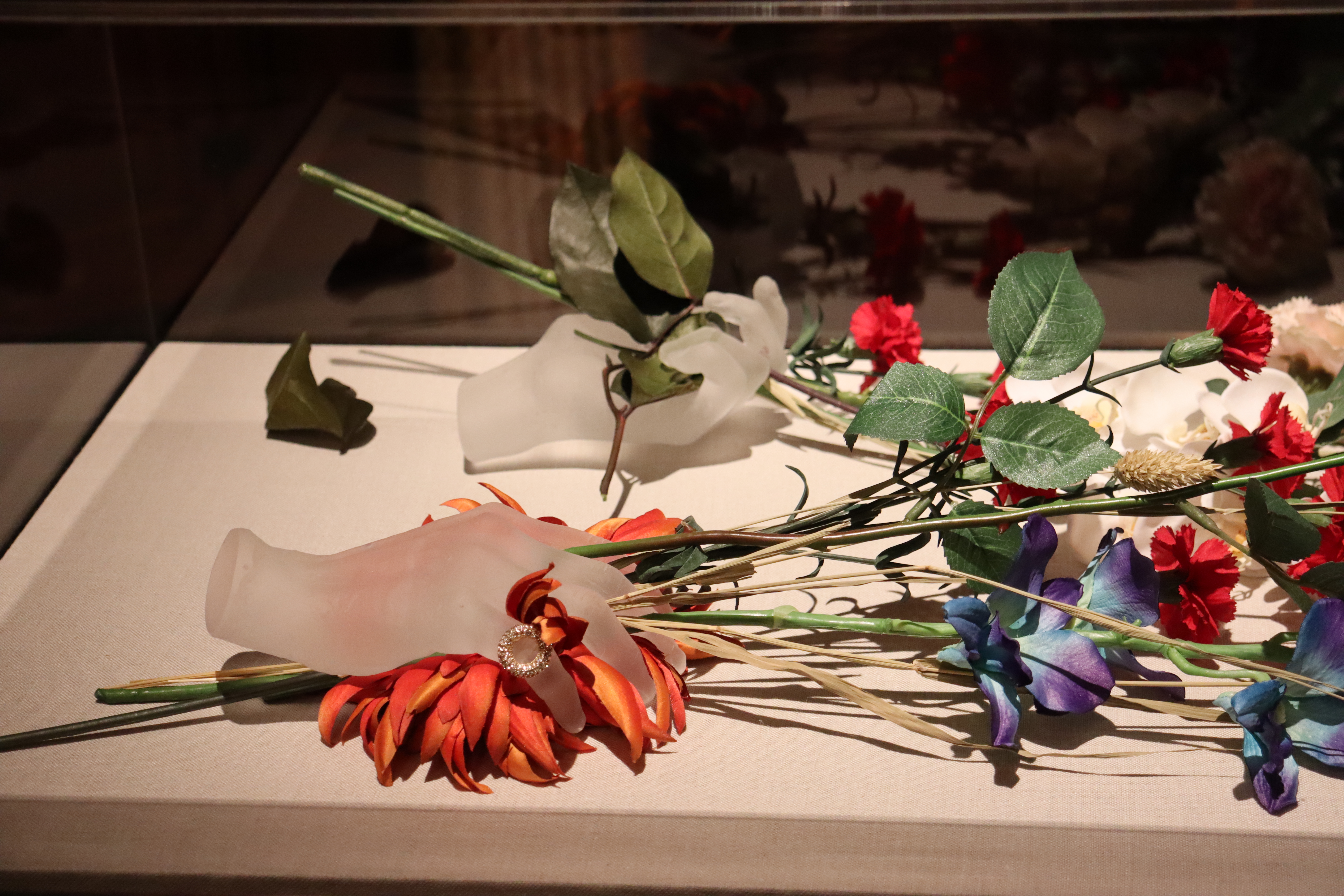
Ebony G. Patterson's "reach…" transforms the mansion’s reception room into a contemplative garden, symbolizing those who would have waited outside, hopeful to be let into high society spaces that denied them entry. Patterson’s use of floral and garden imagery critiques the selective cultivation of beauty, class, and race, drawing attention to the marginalized—particularly African Americans—who were kept at society’s edge.
Jefferson Pinder | Gust, 2024
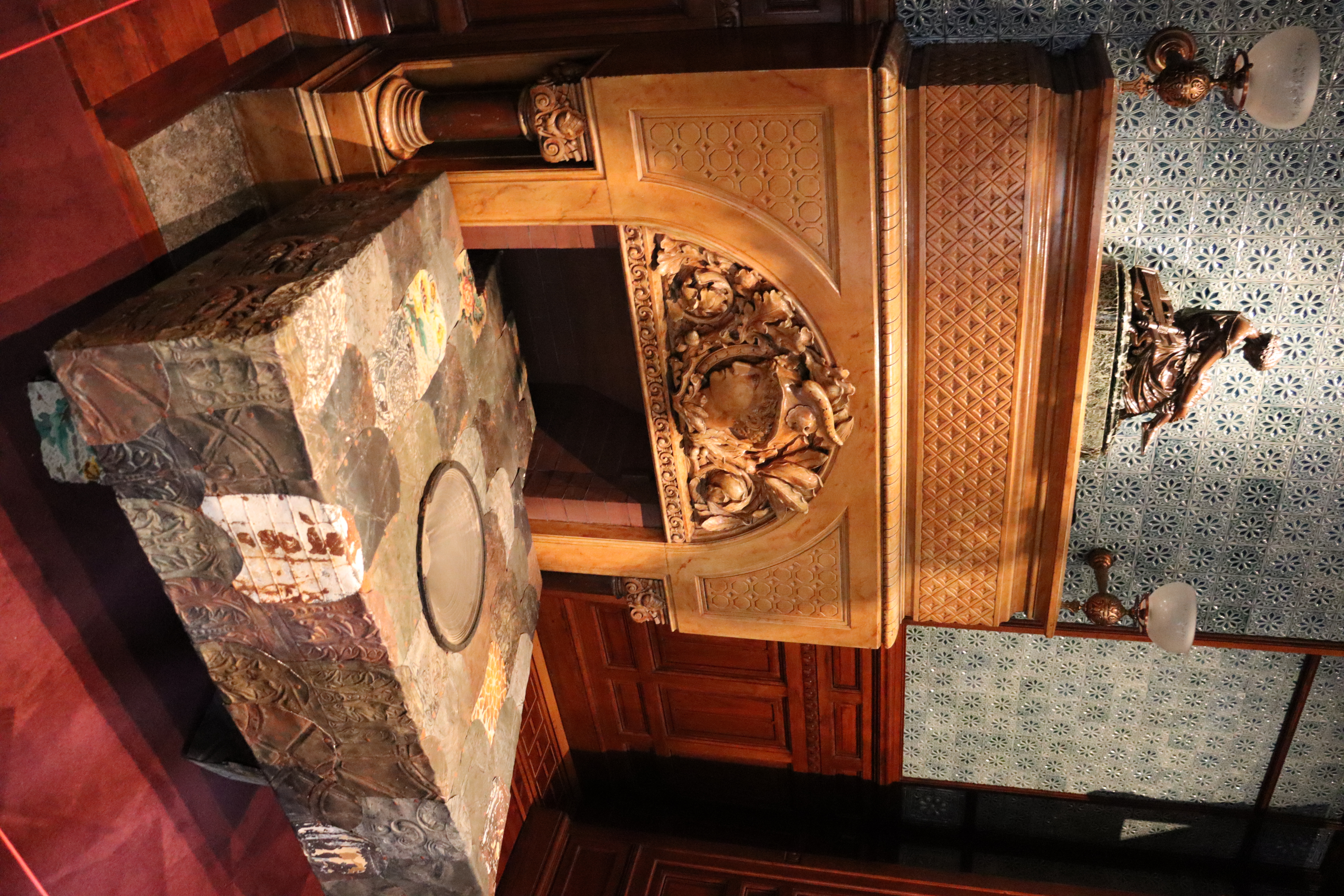
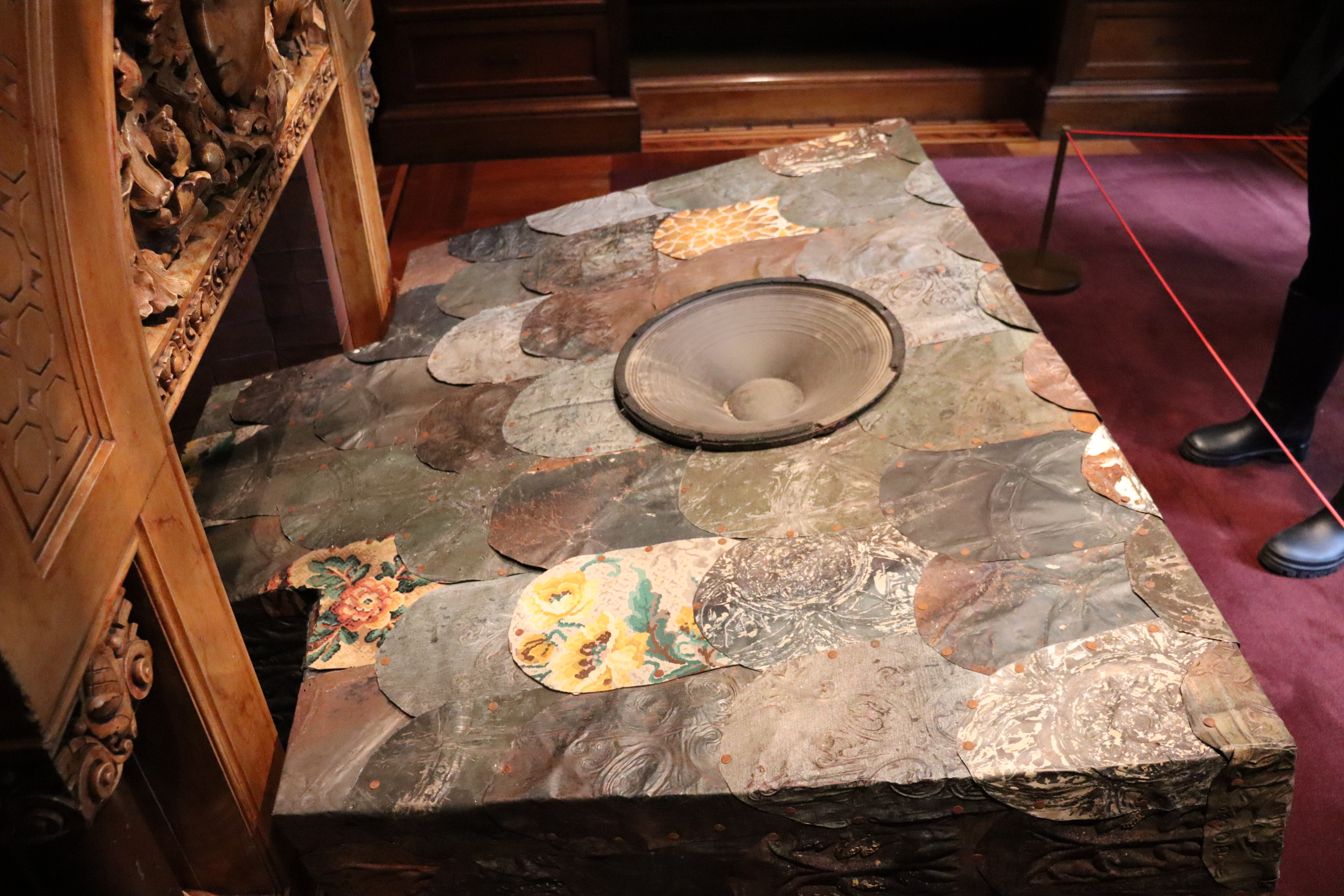
Jefferson Pinder's "Gust" fills the space with the voice of the first Black man ever recorded, accompanied by street sounds from working-class Chicago neighborhoods. Constructed from salvaged immigrant home tiles from Bridgeport, it serves as an aural and material reminder of the cultures and communities that the mansion was built to shut out, making the unseen labor and voices of the city audible and central in a building meant for the rich to block-out and ignore the sounds of struggle going on outside the Nickerson Mansion's walls.
Dreihaus: The Poor, The Rich, & The Ghosts | Andrew Narvaez-Rodriguez © 2025 · All Rights Reserved